
Nasha Mukti Kendra for Dilshad Garden, Delhi Families
Families in and around Dilshad Garden may use this page to prepare for an informed conversation about alcohol or drug-use concerns, rehabilitation support and the next stage of care.
What this locality page is for
Dilshad Garden is identified here as the area used for the search, not as a claim that a separate branch operates there. Families should confirm the centre's current address, availability, admission arrangements and travel details directly before making plans.
Before an admission discussion, write down the person's current concerns, relevant substance-use history, previous treatment information and any immediate safety issues. Ask the centre which documents or details are required and what the next step looks like.
Four practical topics to discuss
Admission Questions
Before an admission discussion, write down the person's current concerns, relevant substance-use history, previous treatment information and any immediate safety issues. Ask the centre which documents or details are required and what the next step looks like.
Family Communication
Family communication is an important practical part of recovery planning. Ask how families can share relevant information, how updates are handled and what kind of guidance may be available during the programme.
Daily Routine
A clear daily routine can help families understand what a programme involves. Ask about counselling, activities, rest, supervision, communication arrangements and how the routine may be adjusted to the person's needs.
Follow-Up Planning
Continuing support should be discussed before discharge rather than left until the last day. Ask what follow-up options are available, what families can do at home and whom to contact if further guidance is needed.
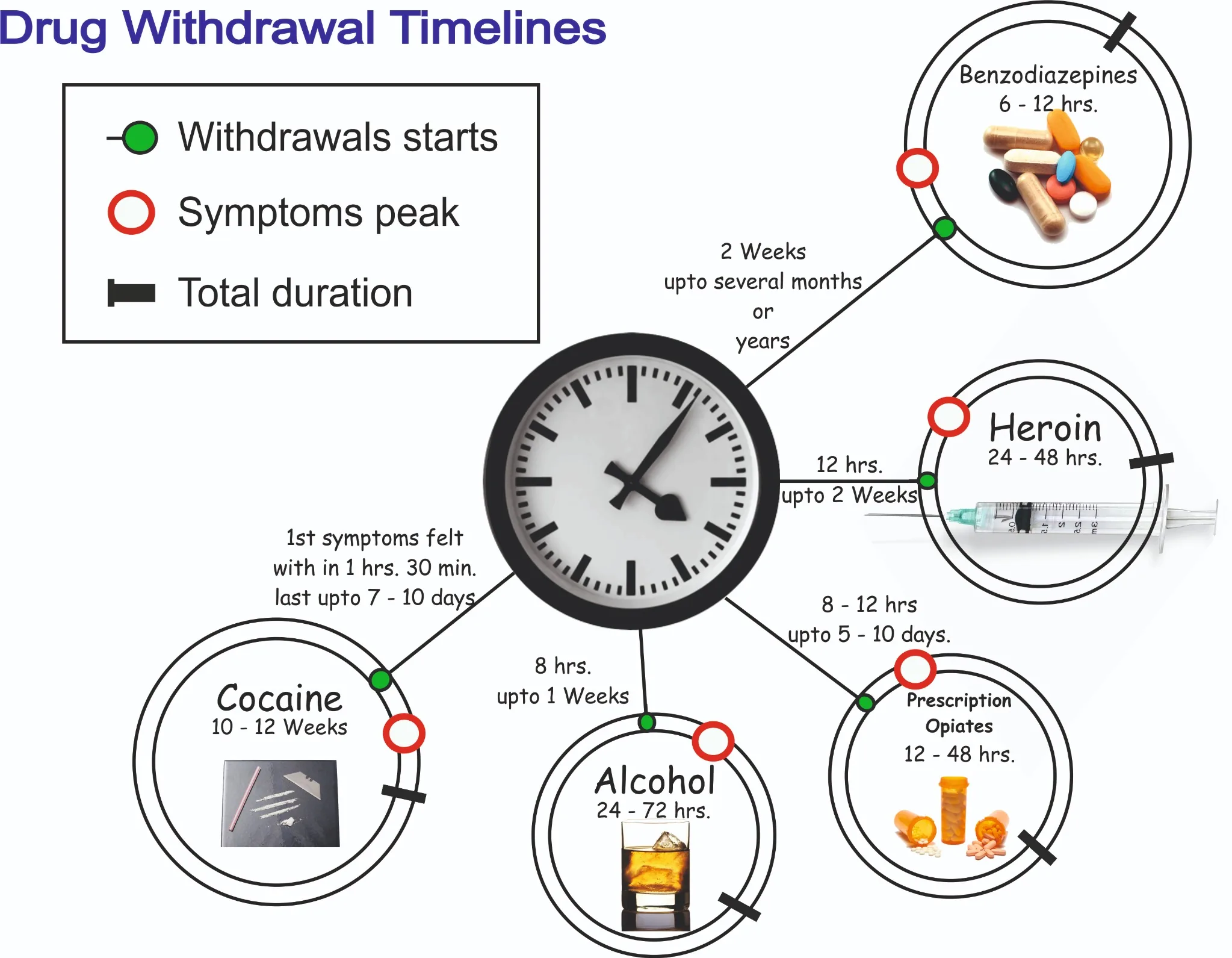
Drug Withdrawal Timelines
Understanding withdrawal timelines can help families prepare for a conversation with qualified healthcare professionals and plan appropriate support.
The timeline can vary by substance and individual. This infographic is provided for general awareness and should not be used to diagnose a person or decide a treatment plan.
A simple checklist for families in Dilshad Garden
- Prepare the main concern and relevant history.
- Ask what assessment and admission steps apply.
- Confirm the current routine and family communication arrangements.
- Discuss follow-up and the transition home.
Questions families in Dilshad Garden may ask
What should families in Dilshad Garden ask about admission questions?
Before an admission discussion, write down the person's current concerns, relevant substance-use history, previous treatment information and any immediate safety issues. Ask the centre which documents or details are required and what the next step looks like.
Why discuss family communication before making an enquiry?
Family communication is an important practical part of recovery planning. Ask how families can share relevant information, how updates are handled and what kind of guidance may be available during the programme.
How can a family prepare for daily routine?
A clear daily routine can help families understand what a programme involves. Ask about counselling, activities, rest, supervision, communication arrangements and how the routine may be adjusted to the person's needs.
Why is follow-up planning worth discussing early?
Continuing support should be discussed before discharge rather than left until the last day. Ask what follow-up options are available, what families can do at home and whom to contact if further guidance is needed.
About location-specific information
This page uses Dilshad Garden as the search area. It should not be read as a claim that the rehabilitation centre operates a separate branch in Dilshad Garden. Current address, availability, admission conditions, travel arrangements and service details should be confirmed with the centre before any visit or admission decision.
Information on a webpage cannot determine whether a particular person needs detoxification, hospital care or another medical service. Where those questions arise, qualified healthcare professionals should be consulted.
Discuss the situation directly
Explain the concern, ask your questions and confirm the current next step for the person who needs support.
For an immediate medical or safety emergency, contact local emergency or medical services rather than waiting for an online enquiry.